How lenders ended up owning Inter and Milan without buying them
Published
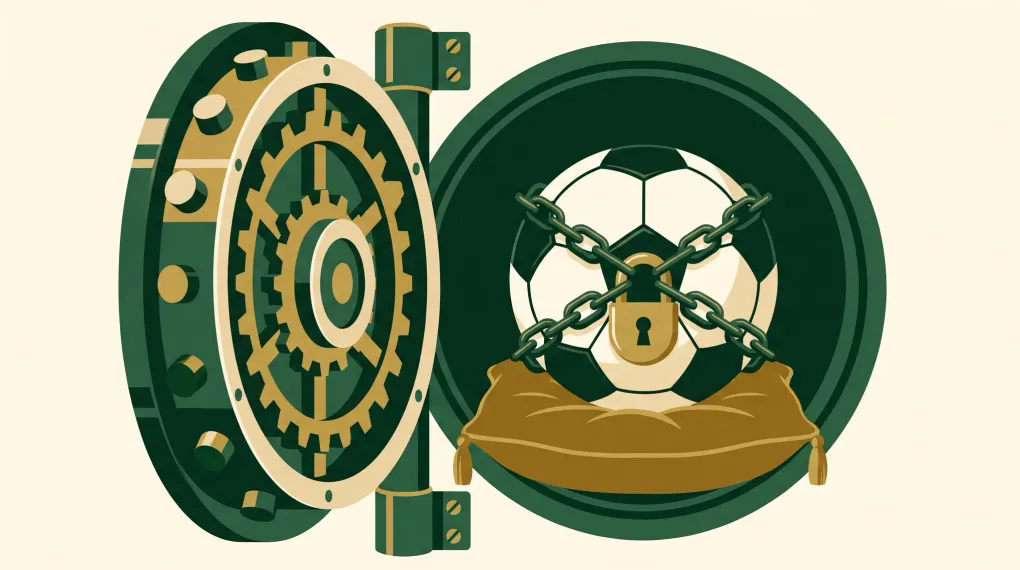
In short: Milan’s two clubs changed hands three times between 2018 and 2024, and not one of those changes was a normal purchase. Each was a lender enforcing security over shares pledged against a loan. Understanding modern football ownership means understanding that the acquisition instrument is usually debt, and the club is usually the collateral.
On 22 May 2024, Oaktree Capital Management issued a statement that began like this:
As of 22 May 2024, funds managed by Oaktree Capital Management, L.P. have assumed ownership of FC Internazionale Milano. This follows the non-repayment of Oaktree’s three-year loan to Inter Milan’s holding companies that matured on 21 May 2024 with a total balance due of approximately €395m.
Oaktree did not bid for Inter. There was no auction, no competing offer, no negotiated price. A loan came due, it was not repaid, and the security was enforced. The club changed owner because a payment date passed.
How Oaktree got there
The story starts in May 2021. Inter had just won Serie A and were forecasting record losses from the pandemic season. Suning, the Chinese retail group that had bought control of Inter in 2016, could not fund the shortfall — Chinese capital controls had by then made outward investment in football effectively impossible.
Oaktree, a distressed-debt specialist, provided rescue financing to Inter’s holding companies. In Oaktree’s own framing, the money was there “to stabilize the Club’s financial situation and enable it to continue operating, including to pay its players and employees.”
The terms were what a distressed lender charges: a three-year maturity, an interest rate reported at around 12%, and — decisively — a pledge over the shares of the holding company through which Suning controlled Inter.
That pledge is the whole story. It converted a loan into a call option on the club. If Suning repaid, Oaktree earned a very good return. If Suning did not, Oaktree owned Inter.
Suning spent the spring of 2024 trying to refinance, with PIMCO the most-reported counterparty. The refinancing did not close. On 21 May the loan matured. On 22 May Oaktree took the shares.
Inter won Serie A that same season. The club was not failing. Its owner’s parent company was.
Milan: bought with the seller’s money
Milan’s version is stranger, because the debt structure runs in the opposite direction.
Elliott Management had itself arrived at Milan through a default. In 2018 it had lent Li Yonghong roughly €300 million to fund his purchase of the club from Fininvest, secured against the shares. Li could not repay, and in July 2018 Elliott took possession — a hedge fund becoming a football club owner without ever having wanted to be one.
Elliott then did what a distressed fund does: cut costs, restructured, rebuilt the squad cheaply, won the Scudetto in 2022, and sold.
The buyer was RedBird Capital Partners, Gerry Cardinale’s fund. The sale completed on 31 August 2022 at an enterprise value of about €1.2 billion. But RedBird did not fund the whole price with its own capital. Elliott provided a vendor loan of around €560 million at 8% interest — that is, the seller lent the buyer a substantial part of the purchase price.
Vendor loans are ordinary in private equity. What made this one contentious is what it left behind. The loan terms allowed Elliott to nominate up to two directors to Milan’s board, and Elliott’s managing partner Gordon Singer has sat on it.
In January 2023 Italian prosecutors opened an investigation, and in March 2024 the Guardia di Finanza searched Milan’s headquarters. The allegation under examination was that the sale was simulated — that Elliott, not RedBird, retained control of the club. Both firms have denied it. Milan and RedBird have stated publicly that Elliott has had no equity interest in or control over the club since 31 August 2022, and that RedBird are the owners and will remain so.
There is a specifically European reason the question matters, beyond Italian company law. Elliott also held Lille. If Elliott controlled both Milan and Lille while the two were registered for UEFA competitions, that is an Article 5 multi-club problem — which is why an Italian tax-police investigation ended up being a story about who is allowed to enter the Europa League.
Why football attracts this kind of capital
Distressed and growth-equity funds are not sentimental about football. Three features make clubs unusually attractive to them.
Revenue that cannot easily collapse. Broadcasting contracts are multi-year and league-wide. Even a badly run club in a big-five league has a floor under its income that almost no ordinary mid-market business has.
Assets carried below their value. Football accounting amortises transfer fees over contract length and assigns academy graduates a book value of zero. A squad can be worth far more than the balance sheet says, which is exactly the mispricing a fund looks for.
Owners who cannot walk away. A distressed industrial owner sells and moves on. A football owner faces relegation, supporter fury, and a domestic league with registration rules that punish non-payment immediately. That urgency is what makes rescue financing so expensive — and the collateral so easy to obtain.
Set against that, football is a poor private equity asset in the conventional sense: exits are slow, buyers are few, regulators must approve them, and dividends are rare. Which is why the structures skew towards debt. A loan with a share pledge gets a fund exposure to the upside without the wait, and a route to control if things go wrong.
What changes when a fund is in charge
The predictable change is cost discipline. Oaktree’s Inter has run a visibly tighter wage bill and leaned on free transfers and expiring contracts. Elliott’s Milan did the same and won a title doing it. This is not asset-stripping; it is what the ownership model rewards.
The less predictable change is the time horizon. A fund holds to exit. Every decision — the manager, the stadium, the academy, the shirt sponsor — is taken by someone whose mandate ends when the asset is sold, typically inside five to seven years.
That is the sharpest possible contrast with the model at the other end of European football. A Real Madrid socio cannot sell their membership and cannot be bought out; the club’s horizon is indefinite because there is no exit to plan for. Inter’s horizon is Oaktree’s holding period.
Neither model is obviously better at winning football matches. Inter reached two Champions League finals in five years under owners in visible financial distress. But they answer different questions about what a club is for, and the answer is set by the capital structure long before it reaches anyone in a dugout.
The pattern worth remembering
Between 2018 and 2024, control of Milan and Inter changed hands three times. Elliott took Milan on Li Yonghong’s default in 2018. RedBird bought Milan in 2022 with €560 million lent by Elliott. Oaktree took Inter on Suning’s default in 2024.
Not one of those was a buyer arriving with the full price in hand. In each case the debt came first and the ownership followed — sometimes as a plan, sometimes as a consequence.
When a club is reported to have been “bought”, the useful question is rarely how much. It is who lent the money, what was pledged against it, and what happens on the day it falls due.
Sources
- Oaktree Assumes Ownership of Inter Milan (official statement)Oaktree Capital Management / Business Wire
- AC Milan under the microscope as sale to RedBird probedFrance 24 / AFP
- Oaktree takeover makes Inter the latest to have their future decided by private equity moneySportcal
- Why Inter Milan have been taken over by US investment fund OaktreeForbes