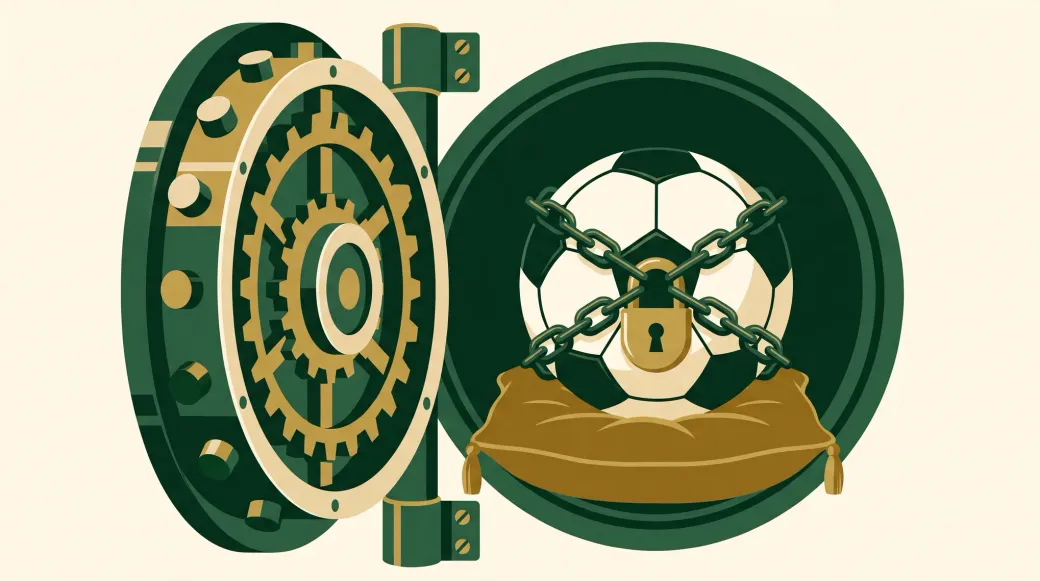
How lenders ended up owning Inter and Milan without buying them
Oaktree took Inter Milan in 2024 by enforcing a defaulted loan. RedBird bought Milan with money from the seller. How private equity actually acquires football clubs.
Analysis
Who owns football clubs and what owning one actually means: members, sporting corporations, sovereign wealth funds and private equity.
Club ownership in football is not merely a financial matter: it determines a club's identity, governance and growth ceiling. In Spain, the 1990 Sports Law forced most professional clubs to become sporting corporations (SADs), but four — Real Madrid, FC Barcelona, Athletic Club and Osasuna — kept their member-owned model. Outside Spain the landscape is even more varied: Middle Eastern sovereign wealth funds, American private equity firms, and multi-club ownership groups controlling networks of clubs across several countries. In this section we analyse who owns each club, under what legal structure, what advantages and constraints each model imposes, and how UEFA and league rules attempt to regulate who may own a club and what they can do with that ownership.
Oaktree took Inter Milan in 2024 by enforcing a defaulted loan. RedBird bought Milan with money from the seller. How private equity actually acquires football clubs.

Saudi Arabia owns 80% of Newcastle but promised it does not control it. How state ownership actually works, and why the rules test control rather than ownership.

How Real Madrid ownership works: what a socio is, why the club is not a corporation, and what it takes to run for the presidency.

Why only four Spanish clubs still belong to their members, how their tax advantage reached the EU Court of Justice, and what changed when Spain repealed the rule.